
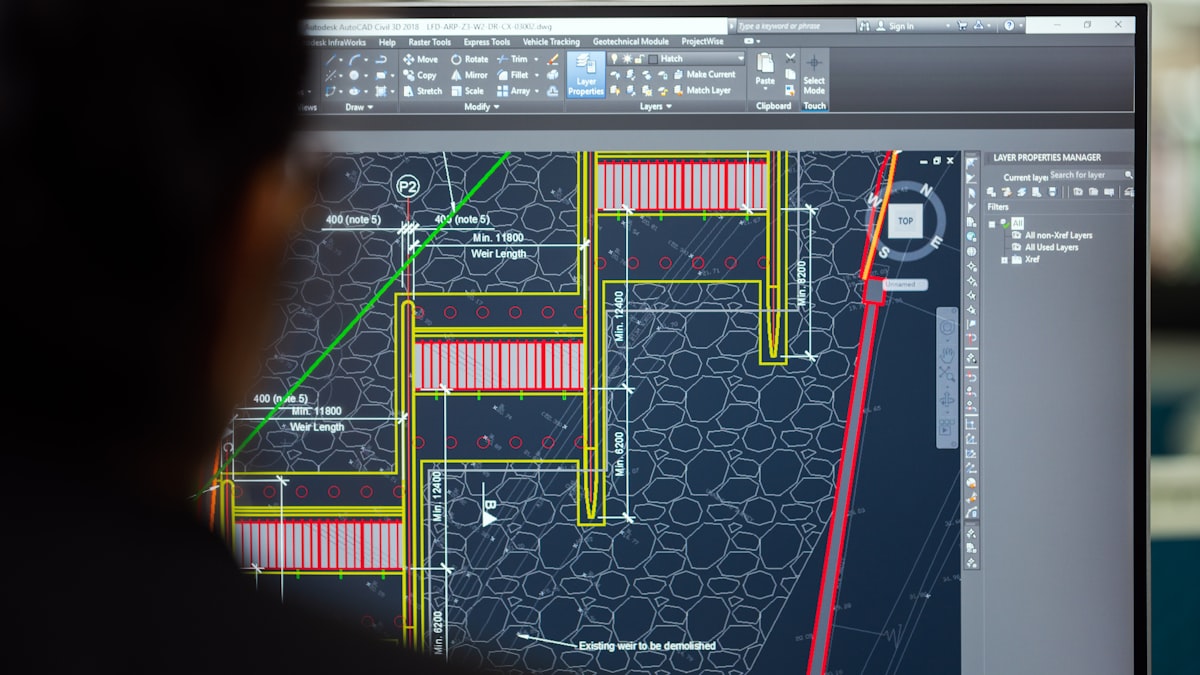
An engineering portfolio is more than a stack of files — it’s a curated 3–5 page showcase of your strongest work. Unlike a resume, which only lists your education and experience, a portfolio proves your skills with real projects, visuals, and results. For mechanical engineers, CAD projects often carry the most weight. Employers want to see if you can move beyond classroom theory into professional workflows — from parametric modeling to assemblies, analysis, and manufacturing drawings. A good portfolio doesn’t just say “I know SolidWorks” — it shows that you can apply tools like SolidWorks, CATIA, NX, or Creo to solve real problems.
Why CAD Projects Matter in Your Portfolio
Most candidates claim CAD experience, but employers need evidence. A strong set of CAD portfolio projects demonstrates that you can:
- Create robust parametric models
- Build assemblies with constraints and motion studies
- Validate designs with Finite Element Analysis (FEA)
- Translate concepts into manufacturing-ready drawings
When presented clearly, these projects prove you’re not just a CAD operator — you’re an engineer who understands the design process end to end.
1. Product Redesign Project
A classic way to demonstrate skill is to reverse engineer and improve an existing product. For example, take a bicycle crank, pump housing, or phone hinge. Model it in CAD, then propose improvements.
- Use parametric modeling to create flexible geometry
- Apply design tables/configurations for iterations
- Show how changes reduce weight, improve ergonomics, or cut costs
2. Mechanical Assembly Project
Assemblies show that you can think beyond single parts and design for fit, tolerance, and motion. A gear train, robotic arm, or small drivetrain works well here.
- Use mates and constraints to assemble parts
- Run a motion study to validate kinematics
- Detect clashes using interference or collision checks
- Add a Bill of Materials (BOM) and exploded views for clarity
This shows employers you understand real-world design intent, not just isolated modeling.
3. FEA Analysis Project
Adding simulation demonstrates you can validate your designs under realistic conditions. A simple bracket or beam analyzed under load is often more impressive than a flashy but untested model.
- Use FEA modules in SolidWorks Simulation, ANSYS, or Abaqus
- Define realistic boundary conditions and material properties
- Compare coarse vs. refined meshes to show accuracy awareness
- Present results as stress plots, safety factors, and deflection values
4. Design for Manufacturing Project
Employers need engineers who can design parts that are practical to build. A Design for Manufacturing (DFM) project demonstrates this awareness.
- For sheet metal parts: show bend allowances, flat patterns, and K-factors
- For machined parts: highlight tolerances, tool access, and fillets
- For injection-molded parts: include draft angles, parting lines, and ribs
- Annotate how these choices reduced cycle time or material waste
This shows you understand the link between CAD and production — a huge credibility boost.
5. Capstone or Personal Passion Project
Your portfolio should also reflect initiative and creativity. Capstone projects or personal builds (like drones, UAV frames, 3D-printed prosthetics, or electric skateboards) are perfect for this.
- Explain your specific role if it was a team project
- Include testing or validation results (not just renders)
- Highlight the engineering trade-offs you faced and solved
These projects often make employers lean in because they reveal curiosity and real problem-solving.
How to Present CAD Projects in Your Portfolio
Great projects can fall flat if they’re poorly presented. Remember, employers skim. A polished 3–5 page PDF or link-based portfolio is far more effective than a 20-page thesis.
- Start each project with a short problem statement
- Add visuals: exploded views, section views, annotated screenshots
- Include at least one 2D drawing with GD&T for professionalism
- Structure explanations: Problem → Solution → Tools → Results
- Show iterations or revision history — proof of process is better than just the final design
Bottom Line — Proof of Skill Builds Trust
For engineers trying to stand out, the best CAD projects for portfolio building are those that demonstrate the entire workflow: concept → part → assembly → analysis → drawing → manufacturability. Employers don’t just want to see that you’ve opened SolidWorks or CATIA; they want proof that you can design intelligently, validate rigorously, and prepare deliverables for production.
A clean, 3–5 page portfolio built around strong CAD projects shows you’re not just job-ready — you’re already thinking like an engineer.
At Inkaer, we help engineers showcase verified portfolio projects so employers can hire with confidence.
How to Present a CAD Project
A CAD portfolio piece is more than the renders. Employers want to see how you think:
- The problem the project solves, in one sentence
- Key design decisions and trade-offs you made
- Constraints — material, manufacturing, cost, regulatory
- Exploded views, sections, or assemblies that show the inner logic
- If possible, a short video walkthrough — you on camera explaining the design
Avoid Common Mistakes
The two failure modes that kill an otherwise strong CAD portfolio: too many similar pieces (pick three diverse ones over ten variations), and renders without context (a hero shot of a part means nothing without the story around it). Curate aggressively and explain everything.